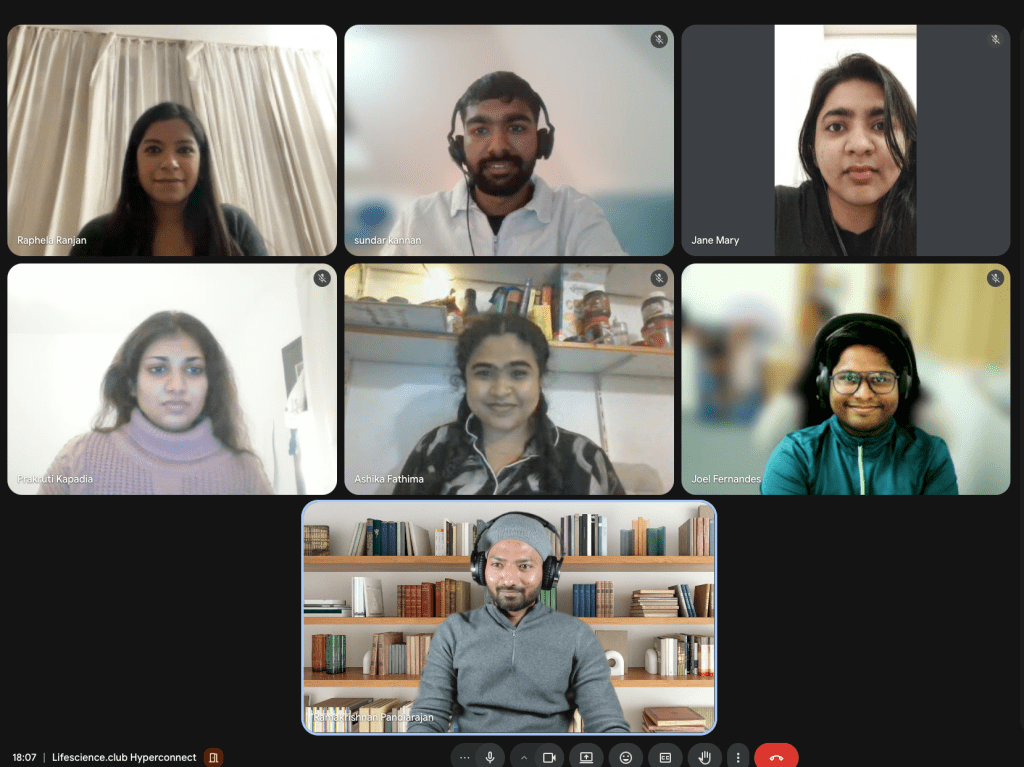
The landscape of professional networking in biotech is shifting. On January 31, 2026, the Lifescience.club.munich hosted its first “Hyperconnect” session, an event designed to break the mold of traditional scientific conferences.
Guided by the vision of Ramakrishnan Pandiarajan, the session provided a dynamic, high-energy alternative to the standard marketing and networking formats usually seen in the life sciences sector.
A Fresh Approach to Connections
The inspiration for the event was as unique as its execution: speed dating. By moving away from formal workshops and static conference booths, the Hyperconnect initiative seeks to build a more fluid and supportive platform for both individuals and biotech companies.
The goal is simple: facilitate genuine connections that can support product marketing and career transitions without the overhead of traditional industry events.
Meet the Participants
The session brought together a diverse group of professionals and students at various stages of their careers, ranging from master’s students to industry leaders:
- Ramakrishnan Pandiarajan: A former doctoral researcher at Helmholtz Munich and current scientist at Numaferm in Dusseldorf.
- Joel Fernandes: Based in Cologne, Joel transitioned from a PhD at the Max Planck Institute to a leadership role as a Department Lead for Quality Management and Quality Assurance.
- Raphela Ranjan: A postdoc at TUM who is currently looking to transition into the industry.
- Sundar Kannan: A biology master’s student at TUM transitioning from wet lab work to a data-focused dry lab role.
- Prakruti Kapadia: A PhD student from Duisburg currently evaluating a move from academia to industry.
- Jane Mary: A plant science master’s student at LMU completing her coursework internship.
- Ashika Fathima: A first-semester master’s student in molecular and cellular biology at LMU seeking new opportunities.
The “Hyperconnect” Method
To maximize interaction, the event utilized a randomized breakout room strategy. The structure included:
- Three Five-Minute Sprints: Participants were shuffled into small rooms to ensure they met a variety of peers in a short amount of time.
- Active Monitoring: Facilitators rotated through the rooms to support the flow of conversation.
- General Discussion: The session concluded with a group-wide talk focused on how the community could collectively help each member achieve their career or business goals.
Join the Community
By exchanging LinkedIn profiles and cameras-on engagement, the Lifescience.club is building a digital ecosystem where researchers and industry experts can find their next big opportunity.
 Lifescience.club
Leave a comment